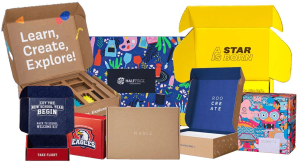
Choosing between different types of packaging can feel overwhelming when every supplier pitches a different material, structure, and price point. You compare quotes, browse samples, and still wonder if you’re about to lock into thousands of units of the wrong solution. The truth is that the "right" packaging isn’t about finding the cheapest option or the prettiest box — it’s about reducing total risk across your entire product journey1.
The right packaging is the option that best controls risk across product protection, brand presentation, minimum order quantities, lead time, certification needs, and total procurement cost. Instead of asking "which type should I pick?", ask "what does my product, sales channel, and order plan need the packaging to handle?" That reframing leads to smarter, lower-risk decisions every time.
That might sound simple, but I’ve seen this reframing change the entire direction of a packaging project in a single consultation. Below, I’ll walk through how to evaluate your real needs, the main packaging categories to consider, how combinations often outperform single-material solutions, and the questions you should answer before placing any order.
Why do most packaging decisions start from the wrong question?
Most buyers open the conversation the same way: "What’s your best price on a custom box?" or "Can you send me a mailer bag sample?" The instinct to compare unit prices first is completely natural. But in custom packaging consultations, I’ve found we usually need to clarify product, order, and market requirements before recommending a structure — otherwise, the quote is just a number with no context.
Starting with price alone can become expensive if the packaging causes rework, delayed launches, inconsistent quality, weak brand presentation, or higher after-sales costs. The lowest unit cost can quietly inflate your total cost of doing business.2
The hidden costs of choosing packaging by price alone
Let me give you a scenario I’ve seen play out more than once. A seller sources the cheapest mailer bag, only to find that the material is too thin for a heavier product. Packages arrive dented or torn. Customer complaints spike. Returns increase. The seller re-orders with a thicker material, but now the timeline has slipped and they’ve missed a selling window. The "savings" from the first order are completely erased — and then some.
Here’s a breakdown of the risk areas that unit price alone doesn’t capture:
| Risk Area | What Can Go Wrong | Hidden Cost |
|---|---|---|
| Product protection | Damage in transit, compression, moisture3 | Returns, refunds, negative reviews |
| Brand presentation | Flimsy feel, poor print quality, mismatched colors | Weaker perceived value, lower repeat purchase rate |
| MOQ mismatch | Over-ordering to hit a low price tier | Warehousing cost, cash flow strain, obsolete stock if branding changes |
| Lead time | Supplier delays, slow sampling | Missed launch dates, lost seasonal revenue |
| Certification gaps | Missing FSC, PEFC, or market-required documentation4 | Customs holds, retailer rejection, compliance fines |
| Quality inconsistency | Variation between production runs | Rework, re-inspection, strained customer trust |
The right question isn’t "what’s cheapest?" It’s "what combination of cost, protection, presentation, and reliability gives me the lowest total risk?"
How to reframe the decision
Before you compare any quotes, write down answers to these five questions:
- What is the product? Size, weight, fragility, compression sensitivity, and whether it needs to be visible or concealed.
- What channel does it ship through? DTC e-commerce, Amazon FBA, retail shelf, wholesale distribution — each has different handling conditions.
- What brand impression must the packaging deliver? Premium unboxing? Minimalist eco-friendly? Purely functional?
- What is the realistic order volume and reorder frequency? This determines which MOQ structures and materials are viable.
- Does the target market require specific certifications or eco-material documentation? EU, US, and Australian markets can have different expectations.5
These answers shape everything downstream. They’re the foundation I recommend building on before discussing any specific packaging type.
What types of packaging suit lightweight e-commerce products?
If you sell lightweight, non-fragile products — think apparel, accessories, soft goods, or flat items — you may not need a rigid box at all. Yet many sellers default to boxes because they feel "safer" or "more premium." The problem? Unnecessary rigidity adds material cost, shipping weight, and sometimes even damage risk when boxes collapse under stacked freight.
For lightweight e-commerce shipping, flexible packaging like poly mailers, bubble mailers, or PE/OPP bags often strikes the best balance between cost, efficiency, and adequate protection. These different types of packaging minimize dimensional weight charges6 and simplify fulfillment workflows.
Poly mailers and bubble mailers
Poly mailers are among the most popular choices for apparel and soft goods sellers on Amazon and Shopify. They’re lightweight, tear-resistant, waterproof, and cost-effective at relatively low MOQs. Custom-printed poly mailers also give you branding real estate without the weight penalty of a box.
Bubble mailers add a layer of cushioning, making them suitable for slightly more delicate items — small electronics accessories, cosmetics, jewelry in protective cases. They’re still far lighter than a corrugated box of equivalent protection.
Key considerations for flexible packaging:
- Material thickness matters. A 2.5-mil poly mailer handles a T-shirt fine; a heavier hoodie might need 3-mil or thicker to avoid punctures.
- Closure type. Peel-and-seal adhesive strips are standard. For returns-friendly packaging, consider double-strip closures.
- Print coverage. Full-color exterior printing is possible, but higher coverage = higher cost. Many brands use a one- or two-color logo for cost efficiency.
- Sustainability signals. Recycled-content poly mailers are available. If your market expects eco-friendly messaging, this is worth discussing early — but verify claims against actual material specs7.
PE bags, OPP bags, and zip lock bags
For inner packaging or product grouping, PE bags and OPP bags serve different roles:
| Feature | PE Bag | OPP Bag |
|---|---|---|
| Clarity | Translucent/matte | High clarity, glossy |
| Strength | Good puncture resistance | More rigid, crisp feel |
| Common uses | Garment wrapping, bundling | Display packaging, gift items |
| Printability | Basic printing | Better print quality |
Zip lock bags add reusability and resealability — useful for accessories, hardware, or items customers may want to store after opening.
The point isn’t that flexible packaging is always right for lightweight products. It’s that matching the packaging’s protection level to the product’s actual vulnerability avoids both under-protection and over-spending.
Higher-value products — cosmetics, premium electronics, specialty food, luxury gifts — typically need more than a poly bag. Here, the packaging isn’t just protection; it’s the first physical touchpoint your customer has with your brand8. A flimsy unboxing experience can undermine a product that took months to develop.
For branded products where presentation and perceived value matter, paper boxes combined with inserts, tissue paper, labels, or accessories often build a stronger unboxing experience and better product protection than any single material alone.
Paper boxes: rigid vs. folding carton
Not all paper boxes are created equal. The two main categories serve very different purposes:
- Rigid boxes (also called set-up boxes): Thick, non-collapsible, luxurious feel. Think phone boxes or high-end cosmetic packaging. Higher unit cost, higher perceived value. Often used for hero products or gift sets.
- Folding cartons: Ship flat, assemble easily, and cost less per unit. These work well for mid-range products, subscription boxes, or higher-volume SKUs where you need branded packaging without the premium price tag of rigid.
The role of accessories in the packaging system
This is where I see many buyers underinvest. A paper box alone is a container. A paper box with the right accessories becomes a brand experience. Consider:
- Tissue paper — wrapping the product inside the box adds a reveal moment and an extra layer of protection against scratches.
- Stickers and labels — seal the tissue paper, add a "thank you" touch, or communicate key product info.
- Hang tags — essential for apparel and accessories; they carry brand story, care instructions, or pricing.
- Ribbons and packaging cords — elevate the presentation for gift-oriented products.
- Wrapping paper — useful for e-commerce brands that want a gift-ready presentation without requiring the customer to wrap anything.
Paper bags as an extension of the brand
For brands with physical retail presence or pop-up events, custom paper bags extend the packaging experience beyond the product itself. A well-designed paper bag becomes a walking billboard. Even for e-commerce, including a branded paper bag inside the shipping package can encourage in-person gifting and social media sharing.
When premium packaging pays for itself
I won’t claim premium packaging always has a positive ROI — that depends on your margins, average order value, and customer expectations. But here’s a useful framework:
If your product’s retail price is more than 5–10x the packaging cost, and your brand competes on experience rather than pure price, investing in premium packaging often reduces return rates and increases perceived value9 more than an equivalent spend on digital advertising10.
That’s not a universal rule. It’s a starting point for the conversation.
How do fabric bags fit into your packaging strategy?
Fabric packaging — drawstring bags, cotton bags, non-woven bags — occupies a unique position. It’s reusable, tactile, and often associated with eco-conscious or artisanal brands.11 But it’s not always the most practical or cost-effective primary packaging.
Fabric bags like drawstring pouches, cotton totes, and non-woven bags work best as secondary packaging, gift packaging, or brand-building accessories rather than primary product protection. They add perceived value and extend brand impressions beyond the initial unboxing.
Drawstring bags
Drawstring bags are popular for jewelry, cosmetics, small electronics, and premium accessories. They serve as a protective inner layer and a keepsake the customer is likely to reuse. Materials range from satin and velvet to organic cotton and muslin.
Key points to evaluate:
- Material choice signals brand identity. Satin = luxury. Muslin = artisanal/natural. Non-woven = practical/eco-oriented.
- Customization. Screen printing, embroidery, and heat transfer are all possible. Embroidery adds a premium touch but increases cost.
- MOQ. Fabric bags often have higher MOQs than paper products due to cutting and sewing setup. Plan accordingly.
Cotton bags and non-woven bags
Cotton tote bags double as packaging and marketing. A branded tote included with a purchase can travel with the customer for months, generating repeated brand impressions. Non-woven bags offer a lower-cost alternative with similar structural benefits and decent print quality.
| Feature | Cotton Bag | Non-Woven Bag |
|---|---|---|
| Durability | High — machine washable | Moderate — not typically washable |
| Feel | Soft, natural | Smooth, synthetic |
| Print quality | Good (screen print, digital) | Good (screen print, heat transfer) |
| Eco perception | Strong (especially organic cotton) | Moderate (recyclable but synthetic) |
| Cost | Higher | Lower |
| Certification | GRS, OEKO-TEX available | Varies by material |
When to include fabric bags in your packaging mix
Fabric bags make the most sense when:
- Your product benefits from a reusable protective pouch (jewelry, sunglasses, leather goods)
- You want to add a gift-ready element without a full box
- Your brand positions around sustainability and reuse — fabric bags reinforce that story
- You’re attending trade shows or events and need branded giveaway bags
They make less sense as standalone shipping packaging, since they offer minimal crush or moisture protection without an outer container.
How do you build the right packaging combination?
This is the insight I most want to leave you with: packaging selection often requires a combination of materials and accessories, not one isolated item. A single component rarely handles protection, presentation, branding, and compliance all at once.
The most effective packaging solutions combine an outer protective layer, an inner presentation layer, branding elements, and compliance-appropriate material choices into one cohesive system tailored to the product and channel.
Example combinations by scenario
Here are some common packaging combinations I’ve seen work well in practice:
Scenario 1: DTC apparel brand
- Outer: Custom poly mailer (branded, 3-mil)
- Inner: Tissue paper wrap with branded sticker seal
- Extras: Hang tag on garment, thank-you card
Scenario 2: Premium skincare line
- Outer: Corrugated shipping box (plain or branded)
- Product packaging: Custom rigid paper box with magnetic closure
- Inner: Foam or molded pulp insert, tissue paper
- Extras: Branded sticker, product card, ribbon
Scenario 3: Jewelry e-commerce seller
- Outer: Bubble mailer or small shipping box
- Product packaging: Small rigid box or drawstring pouch
- Extras: Branded label, care instruction card
Scenario 4: Amazon FBA seller (mid-range electronics accessory)
- Outer: Amazon shipping (seller has limited control)
- Product packaging: Folding carton box with window or full print
- Inner: PE bag for moisture protection, foam insert for shock absorption
- Extras: Branded label, compliance stickers
How to plan the combination
Start from the inside out:
- Product contact layer — what touches the product? Tissue paper, PE bag, foam insert, drawstring pouch?
- Structural layer — what holds the shape and provides crush protection? Paper box, corrugated carton, rigid box?
- Shipping layer — what survives the logistics chain? Poly mailer, corrugated shipper, padded mailer?
- Branding layer — where do your brand visuals, messaging, and story live? Print on box, sticker, hang tag, ribbon, wrapping paper?
- Compliance layer — do any components need FSC certification, recycled content documentation, or market-specific labeling?
Working through these layers helps ensure nothing is missing — and nothing is redundant.
What should you clarify with your supplier before ordering?
Before recommending any specific packaging structure, a responsible supplier should ask — and you should be prepared to answer — a set of critical questions. Skipping this step is where miscommunication, delayed shipments, and disappointing results begin.
You should clarify product details, target budget, MOQ needs, lead time requirements, sampling expectations, and whether any certification or eco-material documentation is required for your target market before finalizing any packaging order.
The pre-order checklist
Here’s what I recommend having ready before your first supplier conversation:
- Product specs: dimensions, weight, fragility level, any special handling needs (e.g., temperature sensitivity, sharp edges)
- Target unit budget: even a rough range helps the supplier recommend realistic options
- Order volume and frequency: first order quantity, expected reorder timeline, whether volumes will scale
- Lead time requirements: when do you need finished goods? Work backward from launch or selling season dates
- Sampling needs: do you need a physical sample before committing? How fast?
- Artwork readiness: do you have print-ready files, or do you need design support?
- Certification requirements: does your retailer or market require FSC, PEFC, OEKO-TEX, GRS, or other documentation?
- Shipping destination: affects packaging weight considerations, customs requirements, and material regulations
Why sampling matters more than you think
I can’t overstate this: never skip the sampling step for a new packaging project. Photos and spec sheets can only tell you so much. A physical sample reveals:
- Actual material feel and thickness
- Print color accuracy
-
"Mastering Packaging in the Supply Chain: Optimize Costs, Reduce …", https://imba.missouri.edu/packaging-in-supply-chain-1924050847.html. A scholarly source on packaging logistics should be cited here to support the view that packaging functions as part of a broader supply-chain risk-control system, influencing product protection, handling efficiency, cost, and customer-facing outcomes. Evidence role: general_support; source type: paper. Supports: Packaging decisions affect logistics performance, product protection, costs, and downstream supply-chain outcomes.. Scope note: Such sources are likely to support the broader framework rather than prove this article’s exact multi-factor checklist. ↩
-
"How much a damaged pack can really cost your business", https://www.amcor.com/insights/blogs/how-much-a-damaged-pack-can-really-cost-your-business. Research on packaging logistics indicates that packaging choices influence not only material cost but also product damage, handling efficiency, and distribution costs, supporting a total-cost approach to packaging procurement. Evidence role: mechanism; source type: paper. Supports: Packaging cost should be assessed together with logistics, damage prevention, and downstream handling costs rather than unit price alone.. ↩
-
""Relative Humidity Effects on the Compression Strength of …", https://open.clemson.edu/all_theses/3225/. Transport-packaging test protocols from recognized packaging institutions identify compression, shock, vibration, and environmental conditions as major distribution hazards, supporting the article’s list of transit-risk categories. Evidence role: general_support; source type: institution. Supports: Transport packaging is commonly evaluated against distribution hazards such as compression, shock, vibration, and environmental exposure.. Scope note: Testing standards establish relevant hazard categories; they do not quantify the likelihood of damage for any specific product in this article. ↩
-
"Chain of Custody Certification", https://fsc.org/en/chain-of-custody. Institutional documentation on FSC and PEFC chain-of-custody certification supports the point that certified paper-based packaging may require traceable documentation of forest-product sourcing. Evidence role: definition; source type: institution. Supports: FSC and PEFC are forest-certification and chain-of-custody systems used to document certified paper or fiber-based materials.. Scope note: These sources define certification systems; they do not show that every market or retailer requires them. ↩
-
"Packaging waste – Environment – European Commission", https://environment.ec.europa.eu/topics/waste-and-recycling/packaging-waste_en. Government and public-agency sources on EU packaging rules, U.S. state extended-producer-responsibility laws, and Australian packaging frameworks support the article’s statement that packaging expectations vary by target market. Evidence role: general_support; source type: government. Supports: Different jurisdictions maintain distinct packaging waste, labeling, or producer-responsibility frameworks.. Scope note: The evidence would be jurisdictional and illustrative, not a complete compliance guide for every product category. ↩
-
"Parcel Size, Weight & Fee Standards", https://faq.usps.com/s/article/Parcel-Size-Weight-Fee-Standards. Postal guidance on dimensional-weight pricing supports the mechanism that package volume can affect shipping charges, making lower-volume mailers potentially less costly than larger boxes when dimensional pricing applies. Evidence role: mechanism; source type: government. Supports: Dimensional-weight pricing bases shipping charges partly on package volume, so reducing package size can reduce applicable shipping costs.. Scope note: Dimensional-weight rules vary by carrier, service, route, and package weight, so the source would support the mechanism rather than guarantee savings in every shipment. ↩
-
"Part 260 – Guides for the Use of Environmental Marketing Claims", https://www.ftc.gov/sites/default/files/attachments/press-releases/ftc-issues-revised-green-guides/greenguides.pdf. Government guidance on environmental marketing claims supports the article’s advice that recycled-content or eco-friendly packaging statements should be verified against documented material specifications. Evidence role: expert_consensus; source type: government. Supports: Environmental marketing claims, including recycled-content claims, should be specific, truthful, and substantiated.. ↩
-
"The Impact of Visual Elements of Packaging Design on Purchase …", https://pmc.ncbi.nlm.nih.gov/articles/PMC11851823/. Consumer-behavior research on packaging design supports the statement that packaging acts as a brand-communication medium and can influence perceived quality and customer evaluation. Evidence role: general_support; source type: paper. Supports: Packaging design can influence consumer perception, perceived quality, and brand communication.. Scope note: Most studies evaluate consumer perception under defined experimental or retail conditions, so the findings provide contextual support rather than a universal effect for all products. ↩
-
"Investigating the Perceived Value of Secondary Packaging for Luxury …", https://rave.ohiolink.edu/etdc/view?acc_num=ouhonors1682440599500036. Empirical research on packaging design and consumer evaluation supports the claim that premium presentation cues can increase perceived value or quality judgments. Evidence role: general_support; source type: paper. Supports: Packaging aesthetics, material cues, and presentation can affect perceived product value or perceived quality.. Scope note: The evidence would support the perceived-value component, not the article’s broader comparison with return-rate reductions or digital advertising performance. ↩
-
"The Impact of Visual Elements of Packaging Design on Purchase …", https://pmc.ncbi.nlm.nih.gov/articles/PMC11851823/. Marketing research that treats packaging as a communication element of the marketing mix can provide contextual support for considering packaging investment alongside advertising when assessing perceived-value effects. Evidence role: general_support; source type: paper. Supports: Packaging can be treated as part of the marketing mix and can influence consumer evaluation alongside advertising and other marketing activities.. Scope note: Neutral academic sources are unlikely to directly prove that packaging outperforms equal digital advertising spend across categories; the citation should be used only to contextualize the comparison. ↩
-
"Plastic, Paper or Cotton: Which Shopping Bag is Best?", https://news.climate.columbia.edu/2020/04/30/plastic-paper-cotton-bags/. Research on reusable bags and packaging sustainability supports the contextual claim that fabric or reusable bags may signal sustainability to consumers, while life-cycle impacts depend strongly on material type and reuse frequency. Evidence role: general_support; source type: paper. Supports: Reusable bags can be associated with sustainability perceptions, while environmental benefits depend on material and number of reuses.. Scope note: The source would not prove that all fabric packaging is environmentally preferable or that every consumer interprets it as artisanal. ↩