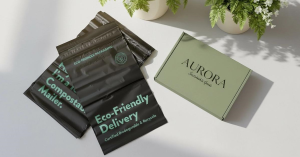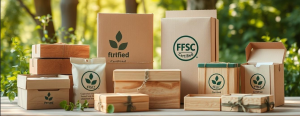
Choosing eco-friendly packaging sounds simple until you realize the answer depends on far more than material alone. A "green" package that fails to protect your product leads to returns, re-ships, and double the waste. The real solution is matching packaging to your product, your market’s disposal systems, and the sustainability claims your brand can honestly back up.
The most eco-friendly packaging is not a single material — it is the option that creates the least avoidable waste for your specific use case. That means considering product protection, shipping conditions, how end consumers actually dispose of the package in your target market, and whether your sustainability claims are backed by verifiable certifications. No material wins in every scenario.
That answer might feel unsatisfying if you came here hoping for a simple "paper beats plastic" verdict. But I’ve seen too many brands make costly mistakes by chasing a single label. Below, I’ll walk through the real variables that determine whether your packaging is genuinely eco-friendly — and give you a practical framework for making the right choice.
Why isn’t there one "most eco-friendly" packaging material?
Every month, we are asked some version of this question: "Just tell me which material is the greenest." The frustration is real. Brands face pressure from consumers, retailers, and regulators to go sustainable — yesterday. But picking a material without context is like choosing a shipping box without knowing what’s inside it.
The reason no single material earns the title of most eco-friendly packaging is that environmental impact depends on the full lifecycle — raw material sourcing, manufacturing energy, transportation weight, product protection performance, and end-of-life disposal1. A lightweight plastic pouch can outperform a heavy corrugated box on carbon emissions per shipment2, while a paper bag can outperform both if the consumer’s municipality has strong paper recycling infrastructure.
The hidden cost of product damage
Here’s a point that rarely appears in sustainability blog posts: a package that fails to protect the product is never eco-friendly3. When a fragile item arrives broken, the customer requests a return. The brand ships a replacement. Now you have two shipments, two sets of packaging waste, and a damaged product headed for landfill.
In packaging inquiries, buyers commonly compare a thin kraft mailer against a rigid paper box for shipping cosmetics or candles. The mailer costs less and uses less material. But if breakage rates climb from 1% to 5%, the environmental math flips entirely. The "heavier" option can produce less total waste.
Context variables that change the answer
Consider these factors before labeling any packaging as the most eco-friendly:
| Variable | Why It Matters |
|---|---|
| Product weight & fragility | Heavier or fragile items need structural protection — thin eco-packaging may cause damage and returns |
| Shipping distance | Longer routes mean more handling; packaging must survive more touchpoints |
| Target market disposal infrastructure | Compostable packaging is useless if no local composting facility exists |
| Brand sustainability claim | "Recyclable" and "compostable" require different proof and different consumer action |
| Certification requirements | Retailers like Whole Foods or Amazon may require specific certifications (FSC, How2Recycle) |
| Order volume & budget | Sustainable upgrades (soy ink, uncoated paper) may require different MOQs or lead times |
I always encourage buyers to start with the product, not the material. What are you shipping? Where is it going? How will the customer dispose of it? These three questions do more for sustainability than any material swap alone.
What makes paper packaging eco-friendly — or not?
Paper has earned a reputation as the go-to eco-friendly packaging material. And in many cases, it deserves that reputation. But "paper" is not a single thing. The eco-friendliness of paper packaging depends on its structure, coatings, certifications, and how it’s actually processed at end of life.
Paper packaging can be genuinely eco-friendly when it uses certified virgin or recycled fiber, avoids non-recyclable coatings or laminations, is structurally designed to protect the product without excess material, and enters a waste stream where paper recycling or composting infrastructure exists. When any of these conditions break down, the environmental benefit shrinks or disappears.
The coating and lamination problem
This is one of the most common blind spots I see in buyer conversations. A beautiful matte-laminated paper box looks premium and feels natural. But that thin plastic lamination film can make the entire box non-recyclable in most municipal systems.
Here’s a quick breakdown of common paper packaging finishes and their recyclability:
| Finish Type | Recyclable? | Notes |
|---|---|---|
| Uncoated paper | ✅ Yes | Easiest to recycle; accepted widely |
| Water-based coating | ✅ Yes (usually) | Thin aqueous coating; most facilities accept it |
| UV spot coating | ⚠️ Varies | Small areas generally acceptable; full-coverage UV may cause issues |
| Matte/gloss lamination (BOPP/PET film) | ❌ Usually no | Plastic film bonded to paper; contaminates paper recycling |
| PE-coated paper (e.g., coffee cups) | ❌ Rarely | Requires specialized facilities that most municipalities lack |
If your brand claims "recyclable packaging" but uses full lamination, you risk greenwashing — misleading consumers about the actual end-of-life outcome. In markets like the EU, where the Green Claims Directive is tightening regulations, this is not just a reputational risk but a legal one.
When recycled content matters — and when it doesn’t
Buyers commonly ask us about using recycled paperboard. It’s a valid eco-friendly choice, but with trade-offs:
- Recycled fiber is shorter and weaker than virgin fiber. For heavy products (bottles, candles, electronics), recycled board may need to be thicker to achieve the same crush resistance, partially offsetting the material savings.
- Recycled content availability varies by region and season. Prices and lead times can fluctuate more than virgin board.
- Not all recycled content is equal. Post-consumer recycled (PCR) content carries more environmental credibility than pre-consumer (mill broke) recycled content4, but PCR supply is tighter.
The takeaway: recycled paper is a strong eco-friendly packaging choice when the structural requirements allow it. But it’s not automatically "better" than certified virgin fiber from responsibly managed forests. Both have a role.
What’s the difference between recyclable, biodegradable, and compostable packaging?
These three terms are used interchangeably in marketing — but they mean fundamentally different things. Mixing them up is one of the fastest ways to lose consumer trust or attract regulatory scrutiny. If your brand prints "eco-friendly" on the box, you need to know exactly which claim you’re making.
Recyclable means the material can be reprocessed into new material through existing recycling infrastructure. Biodegradable means the material will break down naturally over time, but with no guaranteed timeline or conditions. Compostable means the material will break down within a defined period under specific composting conditions (industrial or home). These labels are not interchangeable, and their real-world value depends entirely on local collection and processing systems.
Recyclable packaging
Recyclability is the most common claim in paper packaging — and the most practically useful in most Western markets. The US, Canada, Australia, and Western Europe all have established paper recycling streams. When your paper box or paper bag is uncoated or lightly coated, it enters these systems smoothly.
However, "recyclable" only works if:
- The consumer knows it’s recyclable (clear labeling).
- The consumer has access to recycling collection.
- The material is actually accepted by local facilities.
A paper box with a plastic window, a glued-in foam insert, or heavy lamination may technically contain recyclable paper — but the composite makes it non-recyclable in practice.
Biodegradable packaging
"Biodegradable" is the vaguest of the three terms. Almost everything biodegrades eventually — even some plastics, given enough centuries. Without a certified standard specifying conditions and timeline, "biodegradable" as a standalone claim carries little meaning and is increasingly flagged by regulators as potentially misleading.
In the EU, the term is already under scrutiny. In the US, the FTC’s Green Guides advise that marketers should qualify biodegradable claims with the rate and conditions of decomposition.
Compostable packaging
Compostable packaging meets a specific standard — typically EN 13432 (Europe) or ASTM D6400 (US) — guaranteeing breakdown within a defined period (usually 12 weeks in industrial composting). Home-compostable certifications (like TÜV Austria’s OK compost HOME) set looser conditions.
The catch: industrial composting infrastructure is not widely available5. In the US, fewer than 200 communities have curbside composting that accepts packaging. If your customers can’t access composting, a compostable mailer will likely end up in landfill — where it may not decompose as intended due to lack of oxygen.
Key point for buyers: Choose the claim that matches your customer’s actual disposal options, not the one that sounds most impressive.
How should you evaluate eco-friendly packaging certifications?
Certifications like FSC, PEFC, and GRS are powerful tools — but only when applied correctly. In packaging inquiries, I’ve seen buyers assume that a supplier’s FSC certificate automatically covers every product they sell. It doesn’t. Certification should be treated as a procurement verification tool, not a blanket proof of sustainability.
Eco-friendly packaging certifications verify specific claims about specific materials in specific supply chains. FSC (Forest Stewardship Council) certifies that paper fiber comes from responsibly managed forests6. PEFC (Programme for the Endorsement of Forest Certification) serves a similar role with a different governance structure. GRS (Global Recycled Standard) verifies recycled content claims. Each certificate has a defined scope — and that scope may or may not cover the exact product you’re ordering.
What to verify before trusting a certification
Here’s a practical checklist we share with buyers who need certified eco-friendly packaging:
- Check the certificate scope. Does the supplier’s FSC or PEFC certificate cover the specific product category you’re ordering (e.g., folding cartons, paper bags)? Some certificates cover only certain product lines.
- Verify the certificate is current. Certificates expire. Ask for the certificate number and check it on the certifying body’s public database (e.g., info.fsc.org).
- Confirm Chain of Custody (CoC). For FSC or PEFC claims to appear on your packaging, every link in the supply chain — from forest to printer to you — must hold CoC certification7.
- Understand the label type. FSC has three label categories:
| FSC Label | Meaning |
|---|---|
| FSC 100% | All fiber from FSC-certified forests |
| FSC Mix | Mix of FSC-certified, controlled, and/or recycled fiber |
| FSC Recycled | All fiber from recycled sources |
- Ask about the actual material batch. A supplier may hold FSC certification but source both certified and non-certified paper. Make sure your specific order uses certified material.
Why certification matters for market access
Beyond environmental integrity, certifications increasingly function as market access requirements. Major US and European retailers now require FSC or equivalent certification for private-label packaging. Amazon’s Climate Pledge Friendly program flags products with recognized certifications. The EU’s upcoming packaging regulations will likely tighten requirements further.
At Zhunming, we hold FSC, PEFC, OEKO-TEX, and GRS certifications. But I always tell buyers: don’t take our word for it — verify the certificate number, check the scope, and confirm it applies to your order. That’s what a trustworthy supplier relationship looks like.
What is the best decision framework for choosing eco-friendly packaging?
After years of consulting with DTC brands, Amazon sellers, and distributors, I’ve found that the best decisions start not with materials but with three foundational questions. Skipping these leads to packaging that looks sustainable on paper (no pun intended) but fails in practice.
The most practical framework for choosing eco-friendly packaging begins with three questions: (1) What is the product’s weight and fragility? (2) How will customers in the target market actually dispose of the packaging? (3) What sustainability claim does the brand need to make publicly and defensibly? Answering these before selecting materials prevents costly mismatches.
Question 1: What does the product need?
Start with protection. Map out:
- Product weight — determines minimum board thickness and flute type
- Fragility — glass, ceramics, and electronics may need rigid boxes with inserts; textiles and soft goods can use mailers
- Sensitivity — moisture-sensitive products (food, skincare) may need barriers that affect recyclability
- Shipping method — parcel carriers handle packages roughly; palletized freight is gentler
A product-first approach often narrows the field quickly. For a 200g scented candle shipping via USPS, you likely need a rigid paper box with a snug insert — not a kraft mailer, no matter how eco-friendly the mailer claims to be.
Question 2: What can your customer actually do with it?
This is where many sustainability strategies fail. Research the waste infrastructure in your primary market:
- US & Canada: Strong paper/cardboard recycling; very limited composting infrastructure for packaging
- Western Europe (Germany, Netherlands, Nordics): Advanced recycling and growing composting programs
- Australia: Good paper recycling; composting varies by council
- UK: Paper recycling well established; plastic recycling more limited
If 80% of your customers are in the US, recyclable uncoated paper packaging is the most practical eco-friendly choice — because the infrastructure to process it actually exists at scale.
Question 3: What can your brand honestly claim?
Work backward from the claim you want to print on the package or list on your product page:
- "Recyclable" — requires uncoated or aqueous-coated paper, no mixed materials, and ideally a How2Recycle label for US market clarity
- "Made with recycled content" — requires verified PCR or PIR content; GRS certification strengthens the claim
- "FSC Certified" — requires full Chain of Custody from forest to finished package
- "Compostable" — requires ASTM D6400 or EN 13432 certification and honest communication about composting access
Rule of thumb: If you can’t explain the claim in one sentence to a skeptical customer, simplify or narrow it.
Putting it together
Here’s how the framework plays out for a common scenario:
| Factor | Example: DTC Skincare Brand (US Market) |
|---|---|
| Product | 100ml glass serum bottle, fragile |
| Protection need | Rigid paper box with molded pulp or paper insert |
| Customer disposal | Curbside recycling (paper/cardboard widely accepted) |
| Brand claim | "Recyclable packaging, FSC certified" |
| Material choice | FSC-certified SBS or kraft paperboard, aqueous coating, no lamination |
| Certification needed | FSC CoC, optionally How2Recycle label |
This approach doesn’t chase a trend. It builds packaging that protects the product, works in the real waste system, and supports a defensible brand claim.
Frequently Asked Questions
Is paper packaging always more eco-friendly than plastic?
Not always. Paper packaging is more eco-friendly when it adequately protects the product and enters a functioning recycling stream. If a paper package is too weak for the product — leading to damage, returns, and re-shipments — the total environmental impact can exceed that of a well-designed plastic alternative. Context matters more than material.
What eco-friendly packaging certifications should I look for?
For paper-based packaging, FSC and PEFC certify responsible forest sourcing. GRS verifies recycled content. For compostable packaging, look for ASTM D6400 (US) or EN 13432 (EU) certification. Always verify that the certificate covers your specific product and is current — not expired or limited to other product lines.
Can laminated paper packaging be recycled?
In most cases, no. Plastic lamination (BOPP or PET film) bonded
-
"The Life Cycle Initiative", https://www.unep.org/topics/finance-and-economic-transformations/driving-transformation-science-and-knowledge/life-cycle. Life-cycle assessment frameworks evaluate environmental impacts across a product system’s upstream materials, manufacturing, transport, use, and end-of-life stages. Evidence role: expert_consensus; source type: institution. Supports: Life-cycle assessment evaluates environmental burdens across material sourcing, production, transport, use, and end-of-life stages.. ↩
-
"Corrugated Life Cycle Assessments – Fibre Box Associaton", https://www.fibrebox.org/life-cycle-assessments. Comparative life-cycle assessments have found that lightweight flexible packaging may reduce greenhouse-gas emissions relative to heavier alternatives in particular product and transport scenarios. Evidence role: case_reference; source type: paper. Supports: Comparative packaging life-cycle assessments can show lower greenhouse-gas burdens for lightweight flexible formats in specified applications.. Scope note: The result is application-specific and does not establish that plastic pouches outperform corrugated packaging in every use case. ↩
-
"(PDF) Role of Packaging in LCA of Food Products", https://www.academia.edu/16619221/Role_of_Packaging_in_LCA_of_Food_Products. Packaging can reduce total environmental impacts when its protective function prevents product loss or damage whose production and replacement burdens exceed those of the package. Evidence role: mechanism; source type: research. Supports: Packaging protection can lower total environmental burdens when it prevents product loss, damage, and replacement.. Scope note: Whether added protection is environmentally preferable depends on the product’s value, damage rate, and the impacts of the additional packaging. ↩
-
"Green Guides", https://www.ftc.gov/news-events/topics/truth-advertising/green-guides. Recycled-content guidance distinguishes post-consumer material recovered after consumer use from pre-consumer material diverted during manufacturing, including exclusions for materials routinely reused within the same process. Evidence role: definition; source type: government. Supports: Post-consumer material is recovered after consumer use, whereas pre-consumer material excludes many in-process manufacturing scraps.. Scope note: A distinction in claim strength does not by itself quantify the environmental advantage of a particular PCR supply chain. ↩
-
"Composting | US EPA", https://www.epa.gov/sustainable-management-food/composting. Waste-management data and program guidance indicate that access to composting facilities, particularly facilities accepting certified compostable packaging, varies widely and remains limited in many jurisdictions. Evidence role: statistic; source type: government. Supports: Composting infrastructure and acceptance criteria for compostable packaging are uneven and limited across many jurisdictions.. Scope note: Availability changes over time and must be checked against local collection and facility acceptance rules. ↩
-
"Chain of Custody Certification", https://fsc.org/en/chain-of-custody. FSC certification frameworks set requirements for responsible forest management and for chain-of-custody control of eligible forest-based materials through the supply chain. Evidence role: definition; source type: institution. Supports: FSC forest-management and chain-of-custody certification establish requirements for responsible forest management and traceability of forest-based materials.. Scope note: Certification supports the defined sourcing and traceability claim; it does not by itself measure the complete environmental impact of a finished package. ↩
-
"FSC Standards for Chain of Custody", https://www.in.gov/dnr/forestry/files/FSC-COC_Certification_of_Multiple_Sites.pdf. FSC and PEFC chain-of-custody systems require documented control of certified material through relevant supply-chain stages to support claims on finished forest-based products. Evidence role: mechanism; source type: institution. Supports: Chain-of-custody systems maintain documented control of certified material through relevant production and trading stages so that product claims can be made.. Scope note: The exact certification arrangement can differ where processing is outsourced or conducted under an eligible certificate holder’s control. ↩